
Aluminum Tube for Reservoir: High-Performance Solution for Cooling and Fluid Systems
Release time:
2026-03-18
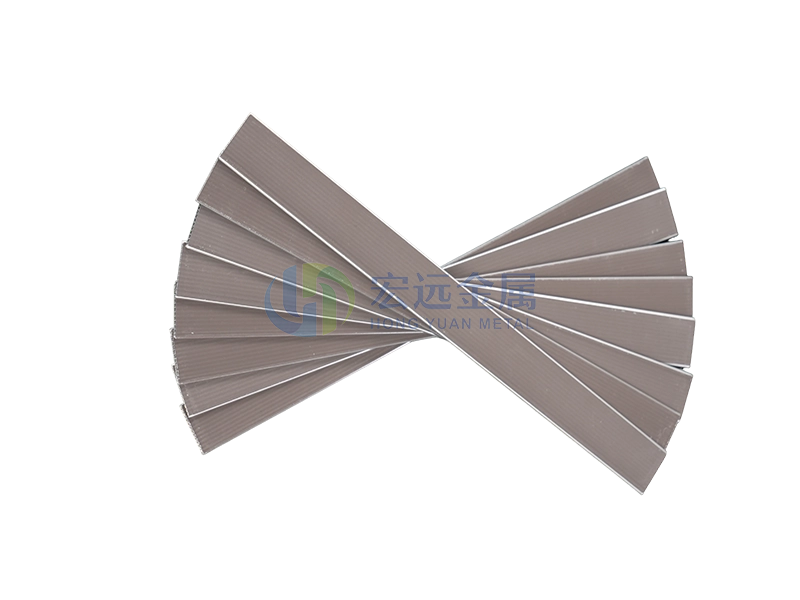
Aluminum tube for reservoir is a lightweight, corrosion-resistant solution designed for efficient fluid storage and thermal management systems. With excellent heat conductivity and customizable dimensions, it is widely used in automotive cooling, HVAC systems, and industrial applications, ensuring reliable performance and long service life.

Product Overview
Aluminum tube for reservoir is a precision-engineered component widely used in thermal management, fluid transport, and storage systems. Designed with excellent corrosion resistance and lightweight properties, it plays a critical role in applications such as automotive cooling circuits, air conditioning pipelines, and heat exchange systems. According to the reference product, these tubes are manufactured using multiple aluminum alloy grades including 1050, 1060, 1070, 3A21, 3003, and 6063, ensuring adaptability to different environmental and mechanical requirements.
Material Characteristics and Advantages
One of the key advantages of aluminum tubes for reservoirs is their superior balance between strength and weight. Aluminum naturally offers excellent thermal conductivity, making it ideal for systems requiring efficient heat transfer. Additionally, specially formulated alloys enhance corrosion resistance, allowing the tubes to maintain long-term performance even in harsh environments such as coolant circulation or refrigerant systems.
These tubes also exhibit high formability and weldability, enabling manufacturers to produce complex shapes and customized configurations. Their internal cleanliness and smooth surface finish further improve fluid flow efficiency, reducing pressure loss and enhancing system reliability.
Technical Specifications
The aluminum tube for reservoir is available in a wide range of dimensions to meet diverse industrial requirements. Typical specifications include an outer diameter ranging from 2 mm to 110 mm and wall thickness between 0.3 mm and 8 mm.
Such flexibility allows engineers to select optimal tube sizes for different reservoir capacities and pressure conditions, ensuring both safety and efficiency in operation.
Applications Across Industries
Aluminum tubes for reservoirs are extensively used in automotive, HVAC, and industrial cooling systems. In automotive applications, they are commonly integrated into condensers, evaporators, and coolant pipelines, contributing to efficient thermal regulation and improved vehicle performance.
In commercial and residential air conditioning systems, these tubes function as key components in heat exchangers and refrigerant circulation systems. Their durability and resistance to corrosion make them ideal for long-term use in both indoor and outdoor units. Additionally, they are applied in heat pump systems, cold chain logistics, and wind power cooling equipment, demonstrating their versatility across modern industries.
Manufacturing and Quality Control
High-quality aluminum reservoir tubes are produced using precision drawing and extrusion processes, ensuring dimensional accuracy and consistent mechanical properties. Advanced testing equipment such as tensile strength testers, corrosion testing machines, and surface roughness analyzers are employed to guarantee product reliability.
Manufacturers also implement strict quality control systems, often aligned with automotive industry standards, to ensure that each tube meets performance expectations under demanding conditions.
Conclusion
Aluminum tube for reservoir stands out as a reliable and efficient solution for modern fluid and thermal management systems. With its combination of lightweight structure, excellent corrosion resistance, and wide application range, it continues to be a preferred material in automotive, HVAC, and industrial sectors. Its customizable specifications and advanced manufacturing processes further enhance its suitability for both standard and specialized reservoir applications.
BLOGS
Aluminum Tube for Reservoir: High-Performance Solution for Cooling and Fluid Systems
Aluminum tube for reservoir is a lightweight, corrosion-resistant solution designed for efficient fluid storage and thermal management systems. With excellent heat conductivity and customizable dimensions, it is widely used in automotive cooling, HVAC systems, and industrial applications, ensuring reliable performance and long service life.


How Microchannel Aluminum Flat Tubes Enhance Energy Efficiency in Buildings
How Microchannel Aluminum Flat Tubes Enhance Energy Efficiency in Buildings Table of Contents 1. Introduction to Microchannel Aluminum Flat Tubes 2. Understanding Microchannel Technology 3. Benefits of Microchannel Aluminum Flat Tubes 4. Energy Efficiency in Buildings 5. Applications of Microchannel Aluminum Flat Tubes 6. Comparison with Traditional Materials 7. Case S
The Essential Guide to Sil Flux Coating Tube in Construction and Decoration
Sil flux coating tubes are integral components in the construction and decoration materials sector, particularly when it comes to steel tubes used in building applications. These tubes are designed with a specialized coating that enhances their functionality and longevity. The Sil flux coating serves multiple purposes, including improving corrosion resistance, facilitating welding processes, and e

Microchannel Flat Tube Coils: The Future of Compact Heat Exchangers
Microchannel Flat Tube Coils: The Future of Compact Heat Exchangers Table of Contents 1. Introduction to Microchannel Flat Tube Coils 2. Understanding Heat Exchangers 3. Advantages of Microchannel Flat Tube Coils 3.1 Improved Efficiency 3.2 Space-Saving Design 3.3 Enhanced Durability 4. Applications of Microchannel Coils in HVAC Systems 4.1 Commercial HVAC 4.2 Residential Applications 5. Comparing
Understanding Preflux Coating Flat Tubes: A Guide for Construction and Decoration Materials
Preflux coating flat tubes are essential components in various construction and decorative projects due to their unique properties and versatility. These flat tubes undergo a preflux coating process, which enhances their durability and resistance to corrosion, making them ideal for demanding environments. The preflux coating serves as a protective layer, ensuring that the steel remains intact even