
Flat Tube Coil Technology: Driving Efficiency and Reliability in Modern Heat Exchange Applications
Release time:
2026-06-12
Flat tube coil technology improves heat transfer efficiency, reduces energy consumption, and supports compact system designs, making it ideal for HVAC, automotive, and industrial cooling applications.

The Growing Demand for Advanced Heat Transfer Solutions
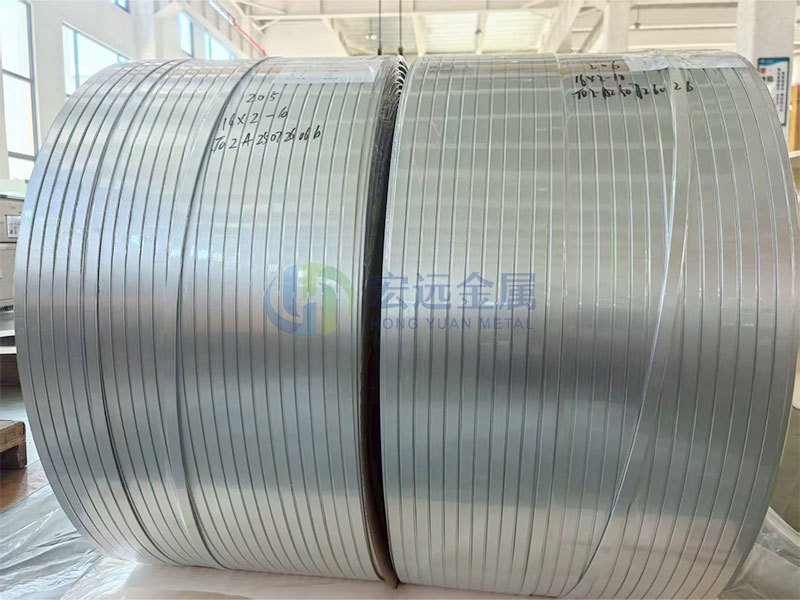
As industries continue to pursue higher energy efficiency and more compact equipment designs, the importance of advanced heat exchange technology has never been greater. From automotive thermal management systems to HVAC equipment and industrial cooling applications, manufacturers are constantly searching for components that can deliver superior performance while reducing energy consumption and system size. Among the many innovations in this field, the Flat tube coil has emerged as a highly effective solution, combining excellent heat transfer efficiency with lightweight and compact construction.
The evolution of heat exchanger technology has shown that even small improvements in component design can lead to significant gains in overall system performance. Flat tube coil technology represents one of these important advancements, helping manufacturers meet increasingly demanding efficiency standards while maintaining long-term reliability.

Why Flat Tube Coil Designs Are Gaining Industry Recognition
Traditional round-tube heat exchangers have served the industry well for decades, but modern applications often require greater thermal performance within limited installation spaces. A Flat tube coil addresses this challenge through its optimized tube geometry.
The flat profile increases the contact area between the refrigerant and surrounding airflow, improving heat transfer efficiency. At the same time, the streamlined structure reduces air resistance, allowing systems to operate more effectively while consuming less energy. These characteristics make flat tube coils particularly suitable for applications where performance, compactness, and energy savings are equally important.
In addition to thermal efficiency, flat tube designs contribute to weight reduction. This advantage is especially valuable in transportation and mobile equipment applications, where every kilogram saved can improve overall operational efficiency.
Innovation Begins with Engineering Excellence
Behind every high-performance Flat tube coil is a commitment to continuous engineering improvement. Modern manufacturing facilities invest heavily in research, design optimization, and production technologies to ensure that products meet evolving market demands.
Engineers carefully analyze airflow characteristics, refrigerant distribution, and structural durability during the development process. Advanced modeling tools are used to evaluate thermal performance before production begins. This engineering-focused approach allows manufacturers to refine tube structures, optimize fin configurations, and improve overall system efficiency.
The result is a product that not only performs effectively under normal operating conditions but also maintains stability during long-term use in demanding environments.
The Manufacturing Process Behind Consistent Quality
The quality of a Flat tube coil is determined not only by its design but also by the precision of its manufacturing process. Every stage of production plays a critical role in ensuring product reliability and performance.
The process begins with the careful selection of high-quality aluminum materials. Raw materials undergo inspection to verify dimensional accuracy, mechanical strength, and surface quality before entering production. Precision forming equipment is then used to manufacture flat tubes with tight tolerances and consistent structural characteristics.
During assembly, automated production systems help maintain uniformity across each coil. Brazing processes are closely monitored to ensure strong and leak-free joints, while temperature controls and process parameters are continuously verified throughout manufacturing.
Quality assurance teams conduct multiple inspections, including dimensional checks, pressure testing, leak detection, and performance evaluations. These procedures help guarantee that every Flat tube coil meets strict quality standards before shipment.
Such attention to detail reflects a manufacturing philosophy centered on reliability, consistency, and customer satisfaction.
Supporting Diverse Industry Applications
One reason for the growing popularity of Flat tube coil technology is its versatility. The product can be adapted for a wide range of industries and operating environments.
In automotive systems, flat tube coils contribute to efficient thermal management and improved fuel or energy efficiency. In HVAC equipment, they help achieve higher cooling and heating performance while reducing equipment size. Industrial cooling systems benefit from their durability, corrosion resistance, and dependable heat transfer capabilities.
As industries continue to focus on sustainability and operational efficiency, demand for advanced heat exchanger components is expected to grow further. Flat tube coil technology is well positioned to support this transition by providing an effective balance between performance, durability, and energy savings.
Building Long-Term Partnerships Through Quality and Service
Successful manufacturers understand that customers value more than technical specifications. They seek dependable partners capable of delivering consistent quality, responsive service, and long-term support.
From product development and material sourcing to manufacturing and final inspection, every step is guided by a commitment to excellence. Continuous investment in production capabilities and quality management systems helps ensure that customers receive products they can trust.
For companies seeking reliable thermal management solutions, learning more about Flat tube coil technology can provide valuable insights into improving system efficiency and performance. Contacting the manufacturer directly is an excellent way to explore technical specifications, customization possibilities, and cooperative opportunities for future projects.
BLOGS

Understanding Preflux Coating for Flat Tubes in Steel Construction
Preflux coating is a process applied to flat tubes that significantly enhances their performance and longevity in various construction and decorative applications. This specialized coating takes place before the welding process and serves as a protective layer that can improve the overall efficiency of the metal during subsequent manufacturing stages. One of the main benefits of preflux coating is

The Environmental Advantages of Using Zn-Silflux Coating Flat Tubes
The Environmental Advantages of Using Zn-Silflux Coating Flat Tubes Table of Contents 1. Introduction to Zn-Silflux Coating Flat Tubes 2. What is Zn-Silflux Coating? 3. Benefits of Using Zn-Silflux Coating Flat Tubes 3.1 Durability and Longevity 3.2 Corrosion Resistance 3.3 Energy Efficiency 4. Environmental Impact of Zn-Silflu
Understanding Microchannel Flat Tube Coils: The Future of HVAC Efficiency
Microchannel flat tube coils represent an innovative advancement in the design and functionality of HVAC systems, particularly in air conditioning, refrigeration, and ventilation equipment. These coils are comprised of flat tubes that are arranged in a compact configuration, offering several advantages over traditional round tube coils. One of the primary benefits is their enhanced heat transfer e

Microchannel Aluminum Flat Tubes: The Future of Lightweight Building Materials
Microchannel Aluminum Flat Tubes: The Future of Lightweight Building Materials Table of Contents 1. Introduction to Microchannel Aluminum Flat Tubes 2. What Are Microchannel Aluminum Flat Tubes? 3. Advantages of Microchannel Aluminum Flat Tubes 3.1 Lightweight Design 3.2 Thermal Efficiency 3.3 Corrosion Resistance 4. Applicatio

Understanding Oil Cooler Tubes: Essential Components for Efficient Performance
Oil cooler tubes play a crucial role in various applications, particularly within the construction and decorative materials sector. These components are essential for regulating the temperature of oil in machinery, ensuring optimal performance and longevity. Whether in heavy-duty equipment or smaller machines, understanding the function and importance of oil cooler tubes can greatly enhance operat

Maximizing Air Flow with Round Tubes for Air Coolers
Maximizing Air Flow with Round Tubes for Air Coolers Introduction to Air Flow in Cooling Systems In the realm of climate control, effective air flow is crucial. Air coolers rely on the movement of air to regulate temperatures, making the design of air ducts and tubes a significant factor in their performance. This article focuses on the advantages of using round tubes in air cooling systems, s